
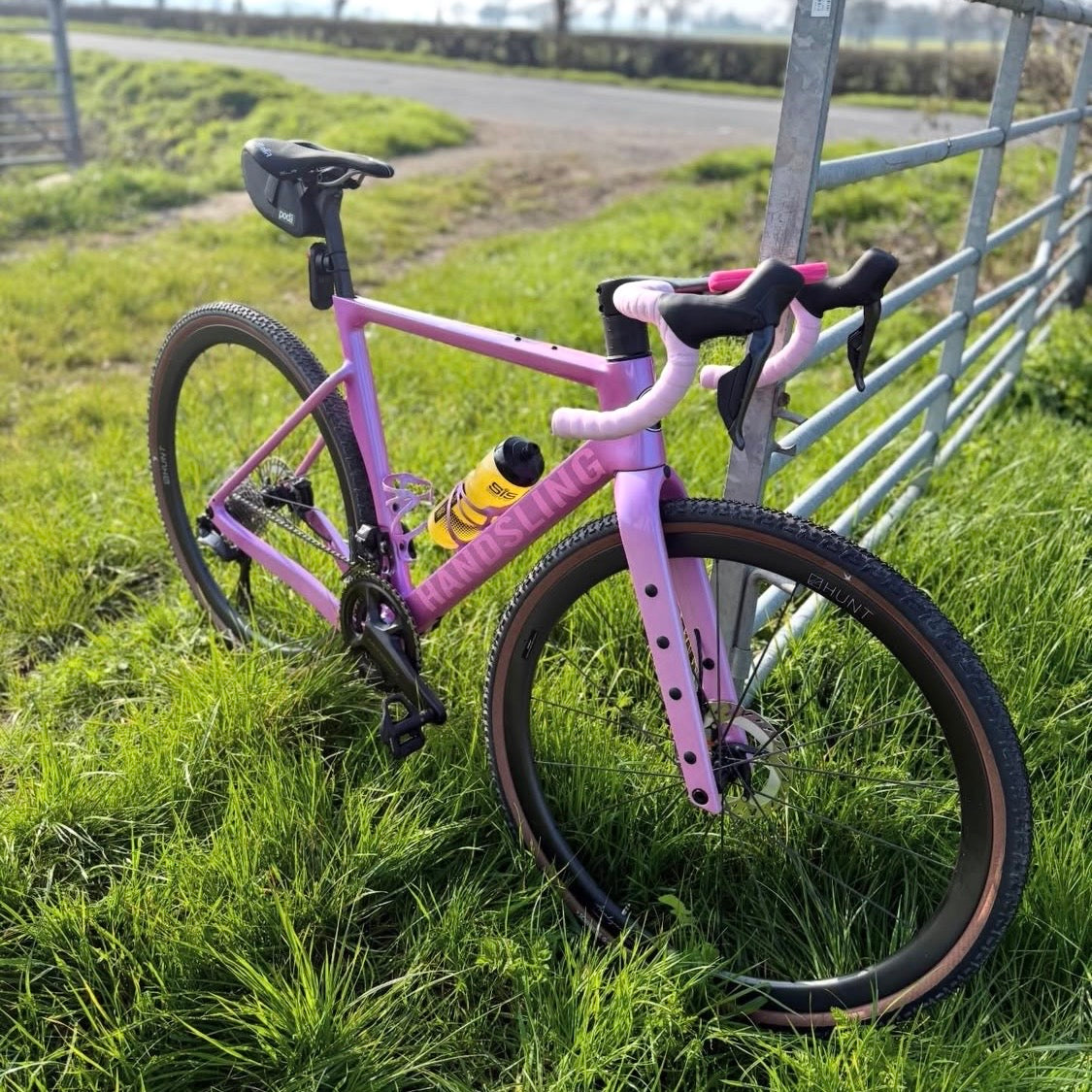
Overall, this is a question of where you ride, how hard you ride, and what kind of performance you expect when the road stops being perfect. The wrong answer costs speed, confidence, and enjoyment. The right answer gives you a bike that feels exact for the riding you actually do, not the riding you imagine once a year.
Do I need a Handsling road bike or an allroad bike?
Start with the simplest distinction. The A1R0evoS road bike is built to be fast, direct and efficient on tarmac. An A1R0evoG allroad bike keeps much of that road speed but adds tyre clearance, extra stability and more tolerance for poor surfaces.
Neither category is better in isolation. It depends on what you ask the bike to do. If most of your riding is fast club runs, racing, chain-gang efforts and long days on decent roads, a road bike is usually the sharper tool. If your routes mix lanes, broken tarmac, farm tracks and the kind of back-road surfaces Britain specialises in, an allroad bike often makes more sense.
That does not mean an allroad bike is slow, or that a road bike is uncomfortable. Our in-house carbon frame design has moved both categories on. But the priorities are different, and serious riders feel that difference quickly.
Choose based on your real roads, not ideal roads
Many riders buy for aspiration. They picture smooth alpine climbs, fast summer chaingangs and immaculate B-roads. Then they go out in February and spend four hours on damp, rough, patched lanes with more grit than the trails. That is where the decision becomes obvious.
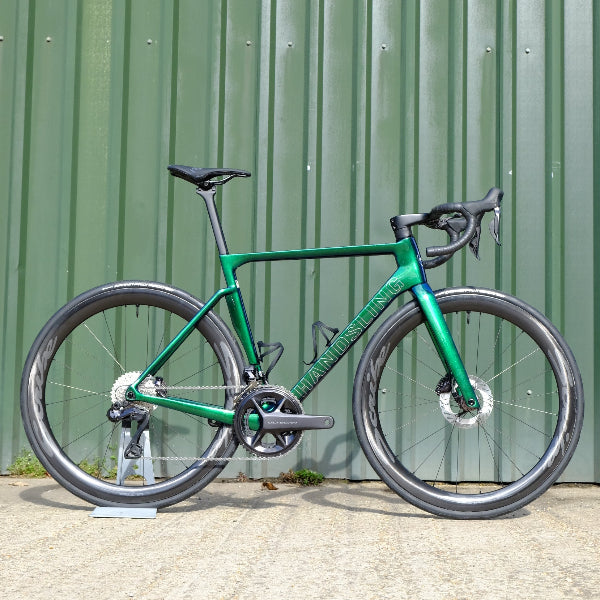
The A1R0evoS road bike rewards smooth power and clean lines. It feels taut under acceleration, more immediate when you stand on the pedals, and more precise at higher speeds on good surfaces. If your riding is predominantly on well-kept roads and you value that crisp, race-led response, it is hard to beat (see below).

The A1R0evoG allroad bike gives away a little of that razor-edge feel in exchange for range. Wider tyres, more surface control and a calmer ride open up roads you would otherwise avoid. On typical British roads, that can make the bike faster in practice, because you hold speed more easily, stay fresher longer and carry more confidence through poor sections.
That is an important distinction. The fastest bike on paper is not always the fastest bike for your route.
When a road bike is the right call
If your riding is performance-first, a road bike is usually where you should be looking. It suits riders who want immediate power transfer, quick handling and a position built around speed. It is the natural choice for road racing, fast bunch riding, structured training and riders who judge a bike by how alive it feels when the pace rises.
You should lean towards the A1R0evoS if most of these sound familiar: you rarely leave tarmac, you prioritise acceleration and responsiveness, you run narrower tyres by choice, and you care more about race feel than route flexibility.
A road bike also makes sense if you already own another bike for rougher terrain. In that case, overlap is wasted. Better to have a dedicated machine that does one job properly.
There is also the matter of rider intent. Some cyclists do not want compromise. They want a bike that feels fast the moment they clip in. If that is you, buying an allroad bike because it seems more versatile can end up being the wrong kind of sensible.

When an allroad bike is the smarter choice
The A1R0evoG allroad bike comes into its own when your rides are not neatly contained by smooth tarmac. It is ideal for riders who spend most of their time on roads but want the freedom to turn onto rough lanes, light gravel, towpaths or badly broken surfaces without thinking twice.
For many UK riders, this is the reality. Not every route is race-circuit clean. Rural roads can be scarred, uneven and loose in places. Wider tyres and more forgiving geometry help the bike stay planted, reduce rider fatigue and make long rides more enjoyable.
If you do big sportive days, mixed-surface training, winter miles, endurance riding or year-round exploration, an allroad bike often fits better than a pure road machine. It gives you more margin. More comfort. More usable grip. More route options.
That extra capability is not just about terrain. It is about consistency. A bike that still feels composed after four hours on rough lanes can leave you riding stronger than a stiffer, more aggressive option that has gradually beaten you up.

Speed versus speed you can use
This is where many buying decisions go wrong. Riders hear "road bike" and think fast. They hear "allroad" and think compromise. That is too simplistic.
On perfect tarmac, a dedicated road bike usually feels quicker and sharper. That part is true. But cycling happens in the real world. Surface quality, tyre pressure, wind, rider fatigue and bike fit all influence speed more than category labels alone.
An allroad bike with the right wheel and tyre setup can be exceptionally efficient on the road. In some conditions, especially over rough surfaces, it can help you maintain momentum better than a more nervous, less forgiving road bike.
So ask yourself a better question than which is faster. Ask which bike lets you ride fastest, most often, on the roads you actually choose.
The tyre clearance question matters more than most riders think
If there is one technical detail that changes the ride most noticeably, it is tyre clearance.
A road bike typically favours a tighter, more focused setup built around road performance. The A1R0evoS offers 32mm tyre clearance, which is generous for the road, but won't accommodate modern gravel tyres.
The A1R0evoG is designed to accept wider rubber - up to 55mm - which changes comfort, grip and control immediately. That can transform rough lane riding, poor weather handling and general confidence.
Wider tyres are not simply about softness. They let you tune the bike for conditions. Lower pressures can improve traction and reduce fatigue. On chipseal, cratered lanes or mixed surfaces, that can be a serious performance advantage.
For riders who like to adapt their setup across the year, an allroad bike offers more headroom. Summer road miles, winter training, spring sportives on questionable roads - one platform can cover all of it with the right build.

Fit, handling and intent
A serious purchase at this level should never come down to marketing labels alone. The better question is how you want the bike to feel beneath you.
Road bikes tend to deliver a more immediate front-end response and a more aggressive overall character. For the rider who wants precision and urgency, that is exactly the point. Allroad bikes generally bring a touch more stability and composure, especially when the surface deteriorates.
Neither feel is universally better. Some riders come alive on a bike that reacts instantly. Others are faster and more confident on a bike that settles the road beneath them.
This is also where build choice matters. A rider-specific setup can move the bike closer to your priorities through wheels, tyres, gearing and contact points. Handsling bikes are custom built to each rider, which matters because two riders can start with the same platform and finish with very different outcomes.
A simple way to decide
If 80 per cent or more of your riding is fast tarmac work and you want the sharpest possible response, choose the A1R0evoS road bike.
If your riding is mainly road but regularly includes rough lanes, poor surfaces or occasional light off-road sections, choose the A1R0evoG allroad bike.
If you race on the road, train hard in groups and care deeply about responsiveness, road remains the strongest fit.
If you want one high-performance bike that broadens your route options without stepping fully into gravel territory, allroad is probably the better answer.
The final test is honest self-assessment. Look at your last three months of riding, not your plans for next summer. Look at the roads, the weather, the tyre sizes you prefer and the kind of rides that matter most to you. Your answer is already there.
A premium bike should not ask you to adapt to its category. It should amplify the way you ride. Choose the machine that matches your real-world demands, and every mile after that gets easier to justify.

Leave a comment
This site is protected by hCaptcha and the hCaptcha Privacy Policy and Terms of Service apply.